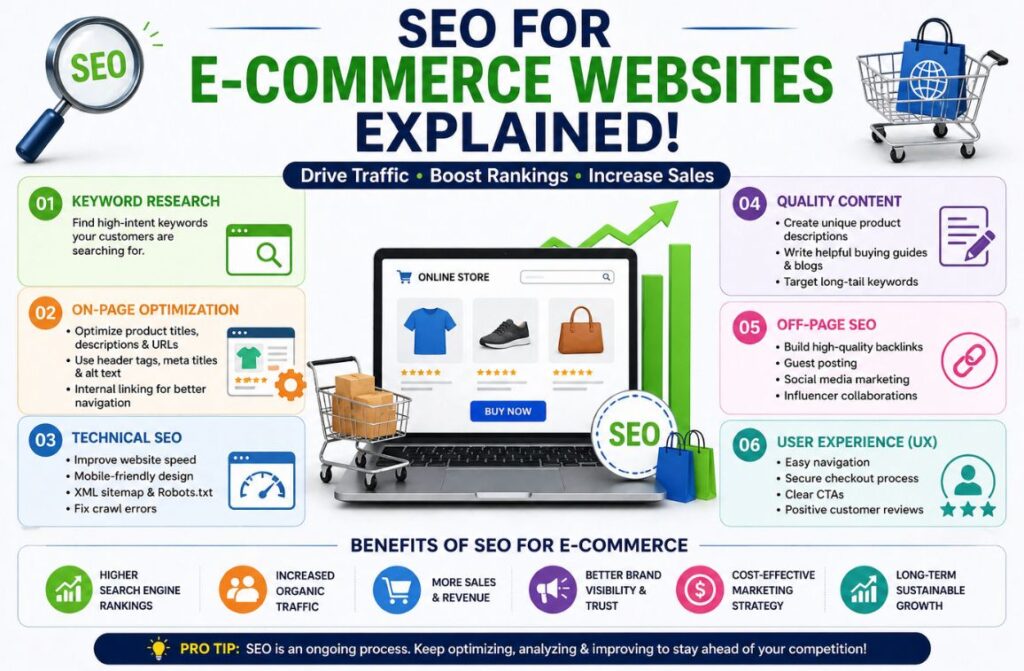
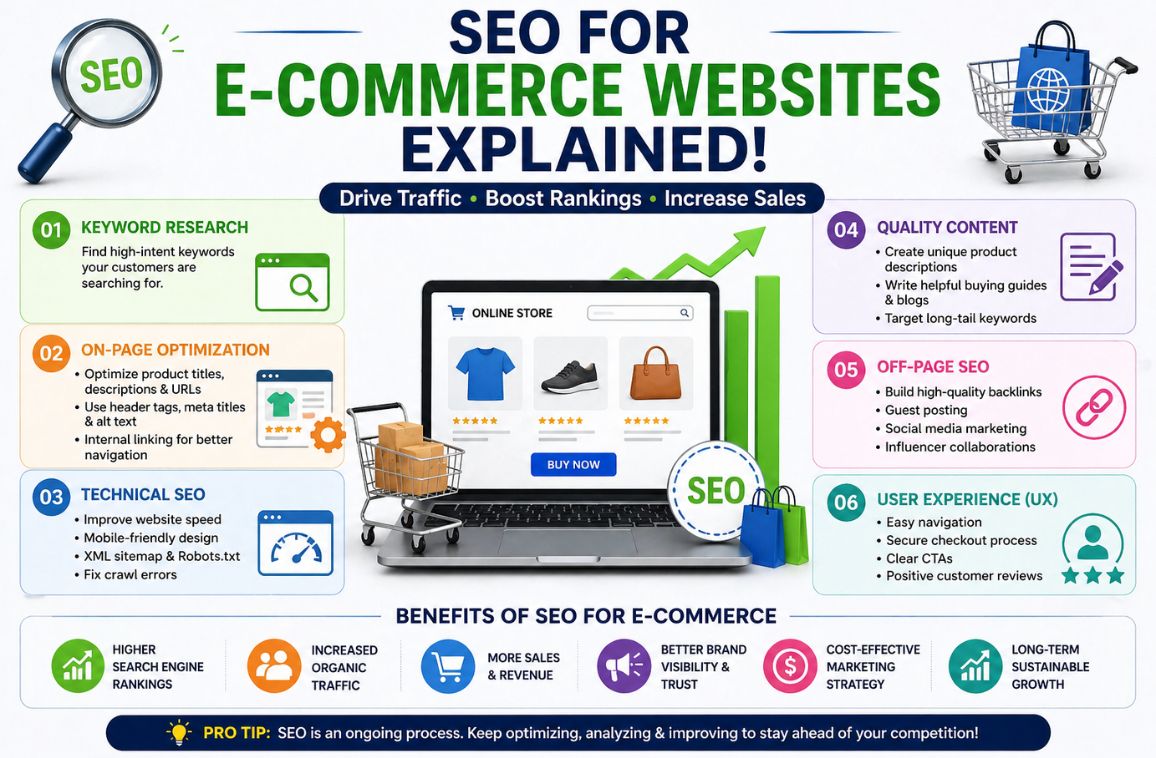
Search Engine Optimization, commonly known as SEO, is the backbone of success for any e-commerce website. With thousands of online stores competing for attention, SEO helps your products appear in front of customers exactly when they are searching. This blog explains e-commerce SEO in a simple, practical way so business owners can understand how it works and why it matters.
What Is E-Commerce SEO?
E-commerce SEO is the process of optimizing an online store so that its product pages, category pages, and content rank higher on search engines like Google. Unlike regular websites, e-commerce platforms need to manage large product catalogues, frequent updates, and competitive keywords.
Key objectives of e-commerce SEO include:
• Increasing organic traffic to product and category pages.
• Improving visibility for buyer-intent keywords.
• Enhancing user experience for better conversions.
Why SEO Is Crucial for Online Stores
SEO drives high-quality traffic that is already interested in buying. When done correctly, it reduces dependency on paid ads and builds long-term brand value.
Major benefits include:
• Higher search engine rankings.
• Better product discoverability.
• Increased trust and credibility.
• Consistent sales growth.
Many businesses partner with a digital marketing company in hyderabad to create scalable SEO strategies that align with business goals.
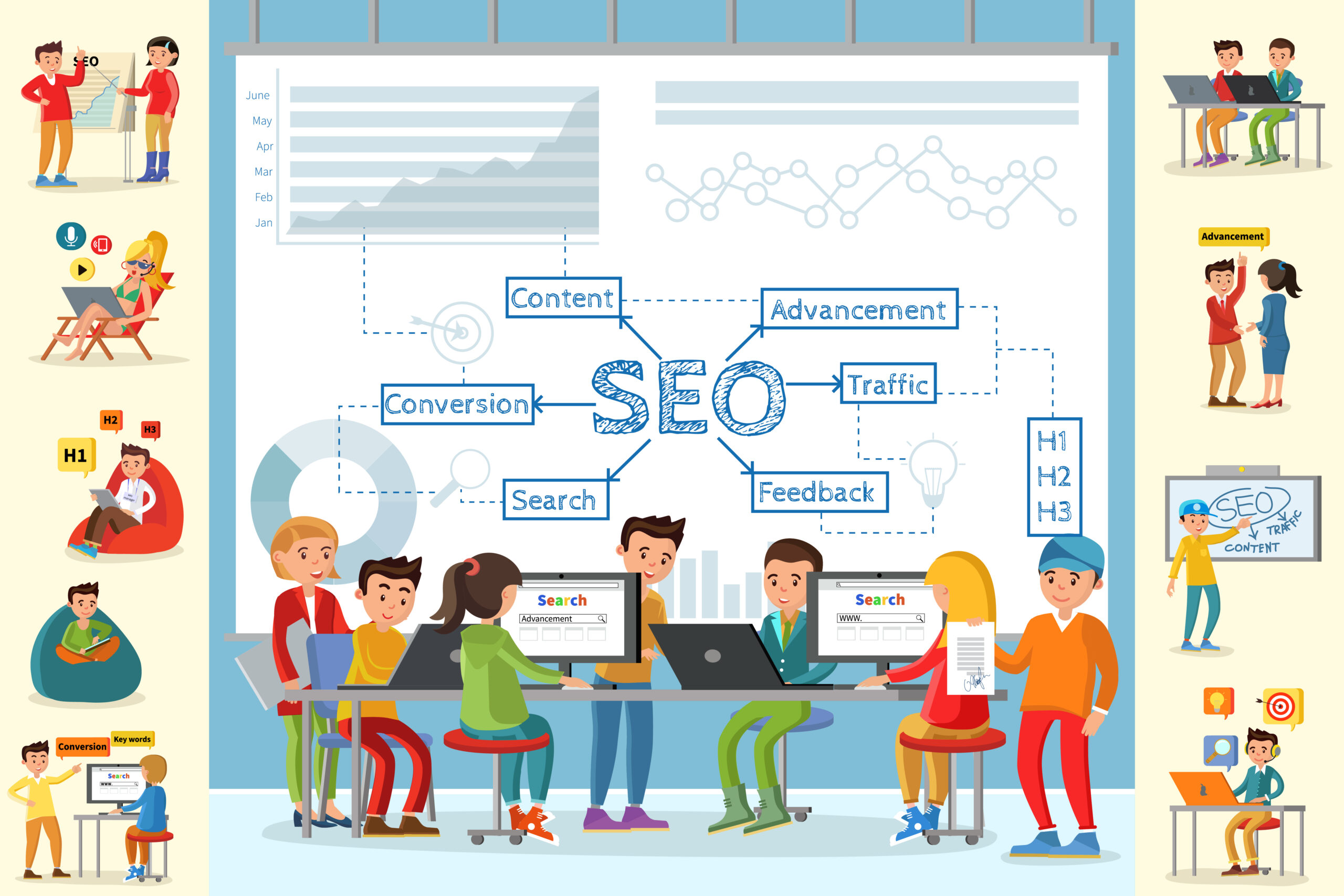
Keyword Research for E-Commerce Success
Keyword research is the foundation of every successful SEO campaign. For e-commerce websites, the focus should be on transactional and commercial intent keywords.
Best practices include:
• Targeting product-specific keywords.
• Using long-tail keywords for niche products.
• Analysing competitor keywords.
• Mapping keywords to product and category pages.
A professional seo agency in hyderabad can help identify keywords that bring not just traffic, but conversions.
On-Page SEO for Product and Category Pages
On-page SEO ensures that search engines understand your pages and rank them appropriately.
Important on-page elements:
• Optimized product titles and descriptions.
• SEO-friendly URLs.
• Proper heading structure.
• Internal linking between categories and products.
• Optimized images with alt text.
Clear content and logical navigation improve both rankings and user experience.
Technical SEO for E-Commerce Websites
Technical SEO focuses on the backend elements of your website that impact performance and crawlability.
Key technical factors include:
• Fast page loading speed.
• Mobile-friendly design.
• Secure HTTPS protocol.
• XML sitemaps for products.
• Fixing duplicate content issues.
Most online stores rely on an experienced online marketing agency in hyderabad to handle these complex technical requirements efficiently.
Content Marketing for E-Commerce SEO
Content plays a powerful role in attracting, educating, and converting users.
Effective content strategies include:
• Product guides and buying tips.
• Blog content addressing customer questions.
• Comparison articles.
• FAQs and knowledge resources.
Content supports SEO by targeting informational keywords and strengthening brand authority.
Off-Page SEO and Link Building
Off-page SEO improves your website’s authority through external signals.
Core off-page strategies:
• High-quality backlinks.
• Brand mentions.
• Social sharing.
• Influencer collaborations.
Ethical link building enhances trust and improves long-term rankings.
Measuring SEO Performance
Tracking SEO performance helps businesses understand what is working and what needs improvement.
Key metrics to monitor:
• Organic traffic.
• Keyword rankings.
• Conversion rates.
• Bounce rate.
• Revenue from organic search.
Reliable reporting ensures continuous optimization and growth.
Choosing the Right SEO Partner
E-commerce SEO requires expertise, consistency, and data-driven decision-making. Partnering with professionals offering digital marketing services in hyderabad ensures that your online store stays competitive in a fast-changing digital environment.
Common SEO Mistakes to Avoid
Many e-commerce websites fail to see results due to avoidable mistakes. Understanding these errors helps businesses save time and resources while improving performance.
Common mistakes include:
• Using duplicate product descriptions across pages.
• Ignoring mobile optimization.
• Overlooking site speed issues.
• Targeting the wrong keywords.
• Neglecting analytics and performance tracking.
Conclusion
SEO for e-commerce websites is not a one-time activity but an ongoing process. With the right strategy, technical foundation, and content approach, online stores can achieve sustainable growth. Investing in SEO today builds visibility, trust, and sales for tomorrow, while creating a strong foundation for long-term digital growth and customer loyalty. A well-optimized store stays relevant, competitive, and profitable in evolving online markets worldwide for businesses.