Social media marketing has become one of the most powerful ways for businesses to connect with their audience, build brand visibility, and drive measurable growth. Whether you are a startup or an established brand, understanding the process step by step helps you use social platforms effectively and avoid wasted effort. This guide explains social media marketing in a simple, structured way so businesses can clearly see how it works and why it matters.
Understanding the Role of Social Media Marketing
Social media marketing focuses on using platforms such as Facebook, Instagram, LinkedIn, and X to engage with customers. It is not just about posting content regularly. It involves planning, creativity, consistency, and analysis. Many businesses partner with a social media marketing company in hyderabad to handle this process professionally and ensure steady results.
Key purposes of social media marketing include:
-
Increasing brand awareness among target audiences.
-
Engaging customers through meaningful content.
-
Driving website traffic and lead generation.
-
Supporting overall digital branding efforts.
When done correctly, social media becomes a long-term growth channel rather than a short-term promotion tool.
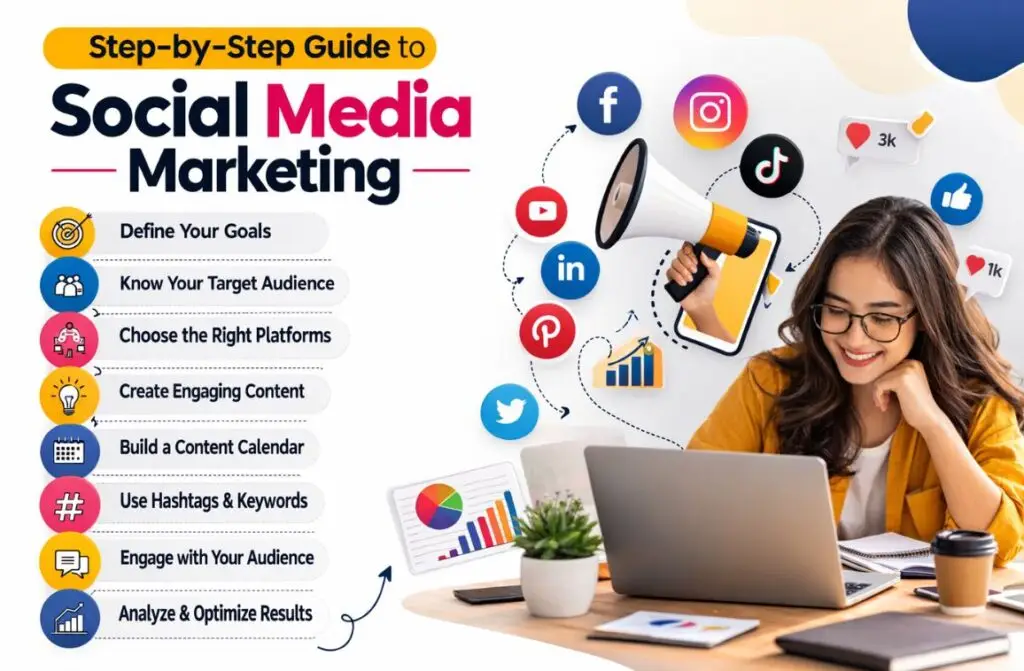
Step 1: Define Clear Business Goals
The first step is setting clear and realistic goals. Without goals, it becomes difficult to measure success or improve performance. Your goals should align with your overall marketing and business objectives.
Common social media goals include:
-
Growing followers and reach.
-
Increasing engagement, such as likes, comments, and shares.
-
Generating leads or inquiries.
-
Driving website visits and conversions.
Clear goals help shape your content, platform choice, and campaign strategy from the beginning.
Step 2: Identify Your Target Audience
Understanding your audience is essential for effective communication. Different platforms attract different user groups, so knowing where your audience spends time saves effort and budget.
Focus on:
-
Age group and gender.
-
Location and language preferences.
-
Interests, needs, and online behavior.
-
Problems your product or service can solve.
A well-defined audience allows brands to create content that feels relevant and personalized rather than generic.
Step 3: Choose the Right Social Media Platforms
Not every business needs to be active on every platform. The right platforms depend on your audience and business type. For example, B2B brands often perform better on LinkedIn, while lifestyle brands see higher engagement on Instagram and Facebook.

Choosing the right channels helps businesses concentrate resources where they matter most and achieve better results with less effort.
Step 4: Create a Content Strategy
Content is the backbone of social media marketing. A strong content strategy balances value, consistency, and creativity. Instead of only promoting products, businesses should focus on educating, entertaining, and engaging their audience.
Effective content types include:
-
Informational posts and tips.
-
Visual content such as images and short videos.
-
Customer testimonials and success stories.
-
Interactive content like polls and questions.
Many brands work with a digital branding company in hyderabad to maintain a consistent brand voice and visual identity across platforms.
Step 5: Plan and Schedule Content
Consistency builds trust and visibility. Posting randomly often leads to low engagement and weak growth. A content calendar helps plan posts and maintain regular activity.
Benefits of scheduling content include:
-
Better time management.
-
Balanced mix of content types.
-
Consistent posting frequency.
-
Reduced last-minute pressure.
Planned content ensures your brand stays active and relevant without overwhelming your audience.
Step 6: Engage With Your Audience
Social media is a two-way communication channel. Responding to comments, messages, and mentions shows that your brand values its audience. Engagement helps build relationships and improve algorithm visibility.
Best engagement practices include:
-
Replying to comments and direct messages promptly.
-
Acknowledging feedback and questions.
-
Encouraging conversations through captions.
-
Participating in relevant trends carefully.
This step is often managed by a social media management agency in hyderabad to ensure timely and professional responses.
Step 7: Analyze Performance and Improve
Tracking performance helps understand what works and what does not. Analytics provide insights into audience behavior, content performance, and campaign effectiveness.
Important metrics to monitor include:
-
Reach and impressions.
-
Engagement rate.
-
Click-through rates.
-
Conversions and leads.
Based on the data, strategies can be refined to improve results. Many businesses rely on a digital marketing agency in hyderabad to analyze data and continuously optimize campaigns.
Conclusion
Social media marketing is not a one-time activity but an ongoing process that requires planning, creativity, and analysis. By following a step-by-step approach, businesses can build strong online relationships, increase brand visibility, and support long-term growth. With the right strategy and consistent execution, social media becomes an asset in today’s competitive digital landscape.