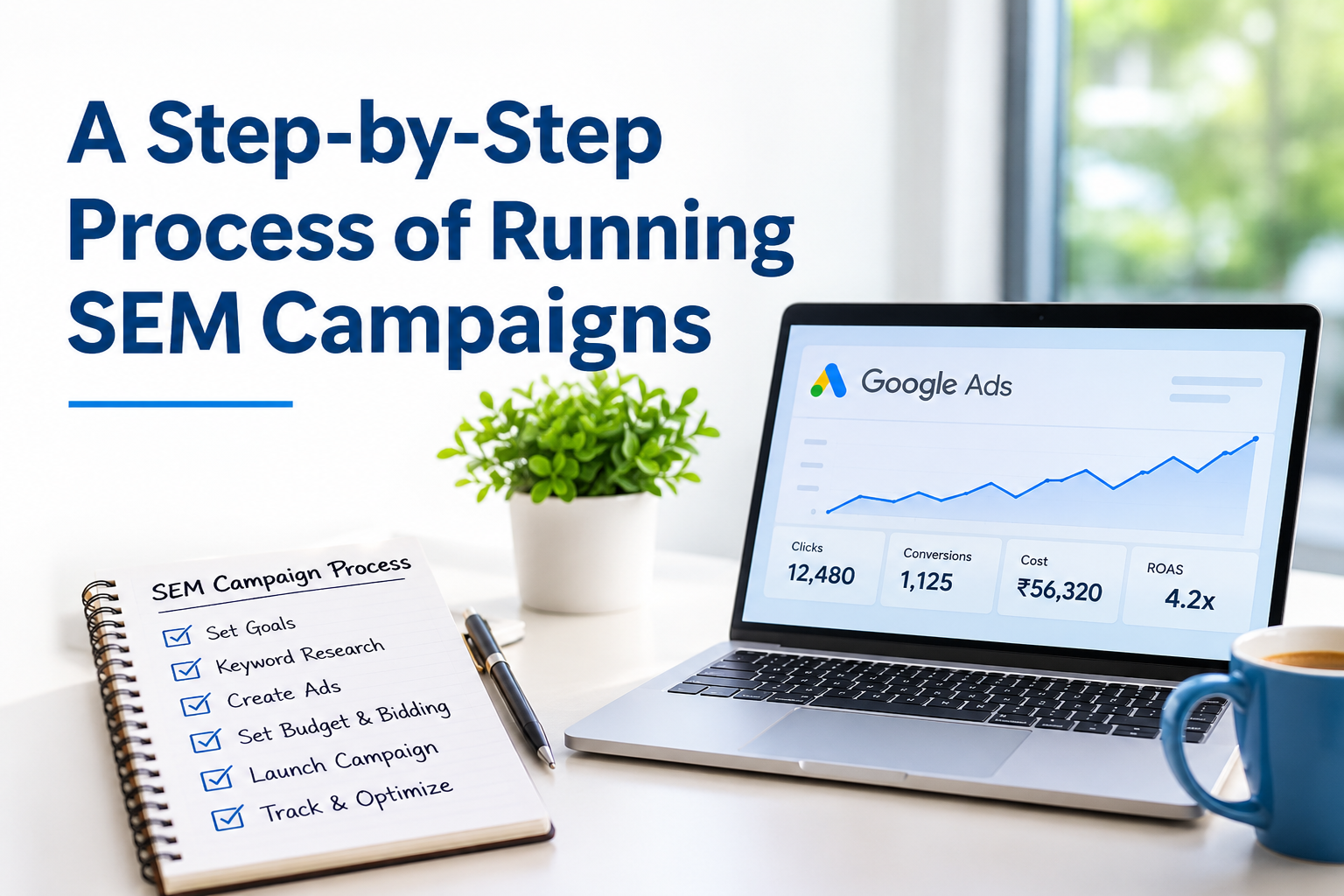
Search Engine Marketing (SEM) helps businesses reach people actively searching online for products or services. Paid search ads can attract relevant visitors and generate enquiries or sales. Success requires planning, monitoring, and improvement.
1. Set Clear Campaign Goals
Decide what you want the campaign to achieve. Goals guide keyword selection, budgets, and measurement.
Common goals include:
- Increasing relevant website visits.
- Generating calls, enquiries, or form submissions.
- Promoting a product, service, or offer.
- Encouraging purchases or appointment bookings.
Set measurable targets, such as qualified leads, cost per enquiry, or return on advertising spend. Targets show whether the campaign creates value.
2. Understand Your Target Audience
Identify the people most likely to need your product or service. Consider their location, needs, and buying behaviour. Think about the words they type into Google.
For a local business, location targeting can focus advertisements on selected cities or nearby areas. This reduces irrelevant clicks.
3. Research the Right Keywords
Keywords connect a searcher’s needs with your advertisement. List phrases describing your offer. Use keyword tools to review demand, competition, and costs.
Group keywords by intent:
- Informational: users seeking answers.
- Commercial: users comparing providers.
- Transactional: users ready to enquire or buy.
Choose specific, relevant phrases instead of relying only on broad terms. Add negative keywords to prevent advertisements from appearing for unrelated searches. Review search-term reports and refine your list regularly.
4. Organise Your Campaign
Build separate campaigns for major services, products, or audience groups. Inside each campaign, arrange related keywords into focused ad groups. This structure supports relevant ads and clearer reporting.
Set the location, language, schedule, daily budget, and bidding approach carefully. Target only areas your business can serve.
5. Write Relevant Advertisements
An effective ad responds to the searcher’s need. Mention the service, explain a useful benefit, and include a clear call to action. Keep claims accurate and consistent with the landing page.
A strong advertisement may include:
- A headline related to the search.
- A short description of the benefit.
- An action such as “Request a Quote”.
- Useful details, including phone information or links to important pages.
Test headlines and descriptions to find what attracts responses.
6. Build a Helpful Landing Page

The landing page should match the ad and make the next step easy.
Include:
- A clear headline and concise service details.
- Relevant benefits, features, or pricing.
- Genuine testimonials or credentials.
- A visible phone number or enquiry form.
- A mobile-friendly design and quick loading time.
Make the main action easy to find. Track calls, form submissions, purchases, or bookings to measure conversions accurately.
7. Plan Your Budget and Bidding
Choose a suitable daily and overall budget. Start with an affordable amount and adjust it as results become clear. Select a bidding strategy based on your objective, such as clicks or conversions. Automated bidding can be useful when conversion tracking provides enough reliable data.
8. Monitor and Optimise Performance
Review the live campaign regularly. Before launch, check links, payment settings, conversion tracking, and policy requirements. This review can prevent errors and wasted advertising spend. Clicks alone do not prove success. Monitor impressions, click-through rate, conversion rate, cost per lead, and enquiry quality.
Improve results by:
- Pausing keywords that spend without useful results.
- Investing more in consistently effective ads.
- Testing new ad copy and landing-page changes.
- Adding negative keywords from search-term reports.
- Comparing results by device, location, and time.
Use evidence and allow tests time to produce meaningful data.
9. Measure and Learn
Create reports connecting advertising activity with business outcomes. Check whether enquiries are relevant, customers are converting, and revenue justifies the spend. Use these insights to improve the next campaign.
Businesses can seek guidance from a digital marketing consultant in hyderabad to plan campaigns and interpret results. Professional sem services in hyderabad may include keyword research, ad creation, tracking, and optimisation. Similarly, ppc services in hyderabad can help manage paid advertising and improve campaign performance.
Conclusion
SEM works best as an ongoing process. Set clear goals, understand your audience, select relevant keywords, write useful advertisements, and create effective landing pages. Monitor results and make informed improvements. With consistent management, SEM can help businesses connect with people already searching for the products or services they provide.