Introduction
Creating useful website content is only the first step toward online visibility. Your content must also be relevant, organized, easy to read, and optimized for search engines. Content optimization helps search engines understand your pages and helps visitors find answers.
A digital marketing company in hyderabad can use content optimization to build a stronger online presence.
1. Understand Your Audience and Search Intent
Identify who you want to reach and what they are searching for.
- Define your audience by considering their needs, location, interests, and challenges.
- Research questions through customer enquiries, search suggestions, and industry discussions.
- Identify search intent: people may want information, comparisons, a service, or a product.
- Match the page to that intent. Create an educational guide for informational searches and a clear service page for potential customers.
2. Choose Relevant Keywords Naturally
Keyword research shows the words people use when searching online. Select one primary keyword for each page and include related terms only where they fit.
- Choose phrases that accurately describe the page.
- Check that the keyword matches the reader’s expectations.
- Avoid keyword stuffing, which makes writing repetitive and difficult to read.
- Use related terms, questions, and synonyms naturally.
For example, someone searching for an seo agency in hyderabad may also want information about website rankings, technical SEO, or local search. Explain related subjects instead of forcing one phrase into every paragraph.
3. Write Clear Titles and Headings
Titles and headings help readers scan a page and understand its structure.
- Create a descriptive page title that reflects the main topic.
- Use one clear H1 heading for the central subject.
- Divide long sections with meaningful H2 and H3 subheadings.
- Keep headings specific and avoid unnecessary repetition.
- Write an informative title tag that encourages relevant visitors to click.
A well-structured article helps people find information, especially.
4. Make Content Helpful and Readable
High-quality content should solve a problem or explain a topic accurately. Avoid copying information from other websites without adding value.
- Use simple language and explain technical terms.
- Break complex ideas into short paragraphs and bullet points.
- Add practical steps, examples, or original observations.
- Support important claims with reliable sources when needed.
- Check spelling, grammar, dates, and service details before publishing.
Useful content builds confidence and encourages readers to explore your website or contact your team.
5. Optimize Images and On-Page Elements
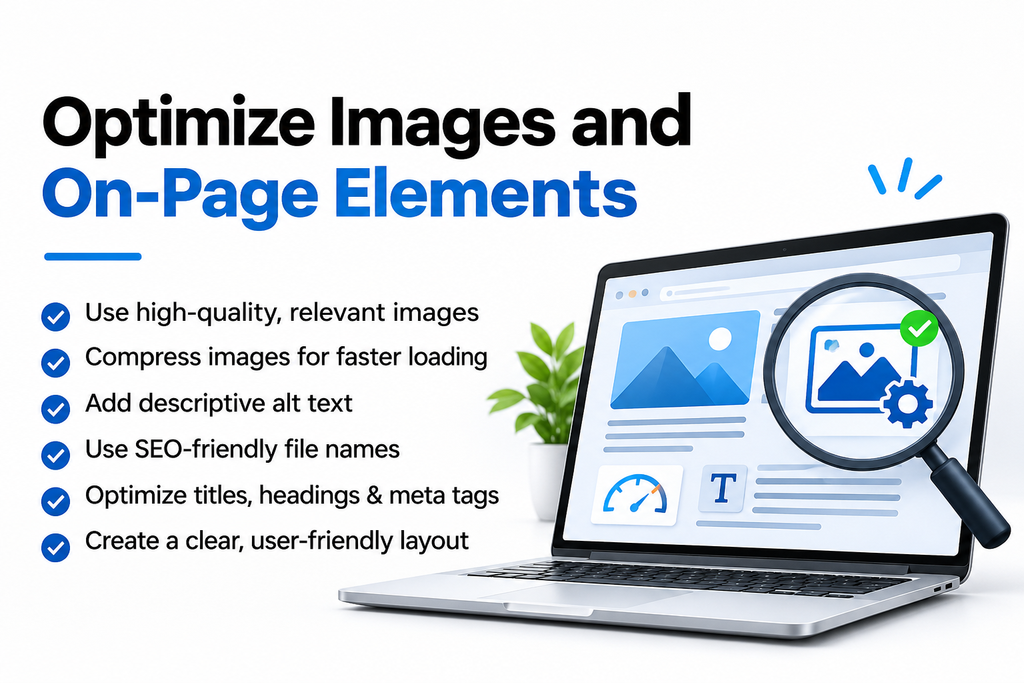
Images make pages engaging, but they should not slow down the website.
- Compress images and use suitable file formats.
- Write descriptive alt text for meaningful images.
- Give image files clear names.
- Link to related pages with descriptive anchor text.
- Add a concise meta description that explains the page’s value.
6. Improve the Website Experience
Visitors need a website that works well. Check that pages load quickly, display correctly on mobile devices, and have simple navigation. Fix broken links and avoid pop-ups that interrupt reading.
Good website experience supports digital marketing services in hyderabad by helping visitors move from discovering information to exploring relevant services. Make contact details and calls to action easy to find without overwhelming the page.
7. Measure, Update, and Improve
Optimization is ongoing. Use Google Search Console and website analytics to understand page performance.
- Monitor impressions, clicks, search queries, and average positions.
- Identify pages that receive traffic but few enquiries.
- Update outdated information, links, examples, and statistics.
- Improve pages when customer needs or search intent change.
- Review the results after testing clearer headings or calls to action.
Conclusion
Better SEO results come from audience research, relevant keywords, clear structure, helpful information, and a positive website experience. Review every page from the visitor’s point of view. Does it answer the question and make the next step clear? Consistent improvements can strengthen search visibility and turn visitors into meaningful enquiries. Focus on value, measure performance, and refine your content as your audience evolves.