Why Online Feedback Matters
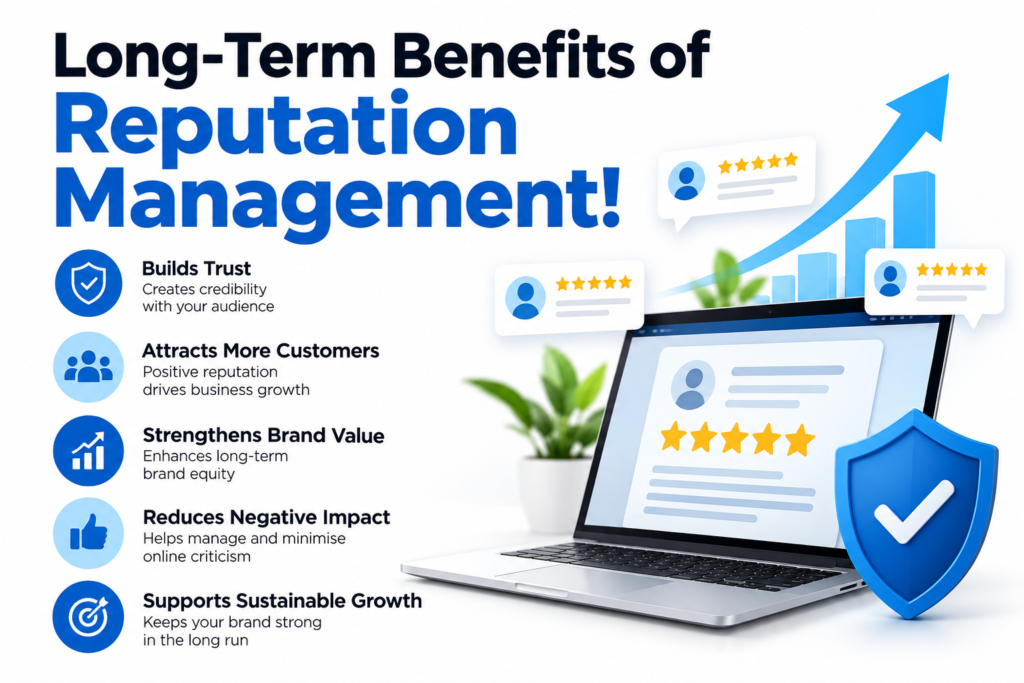
Online feedback strongly influences how customers judge a business. Reviews, ratings, and comments can affect whether someone decides to contact, visit, or purchase from a company. Positive feedback builds trust, while negative feedback can highlight areas needing attention. Businesses should treat feedback as valuable customer insight.
Monitor Feedback Regularly
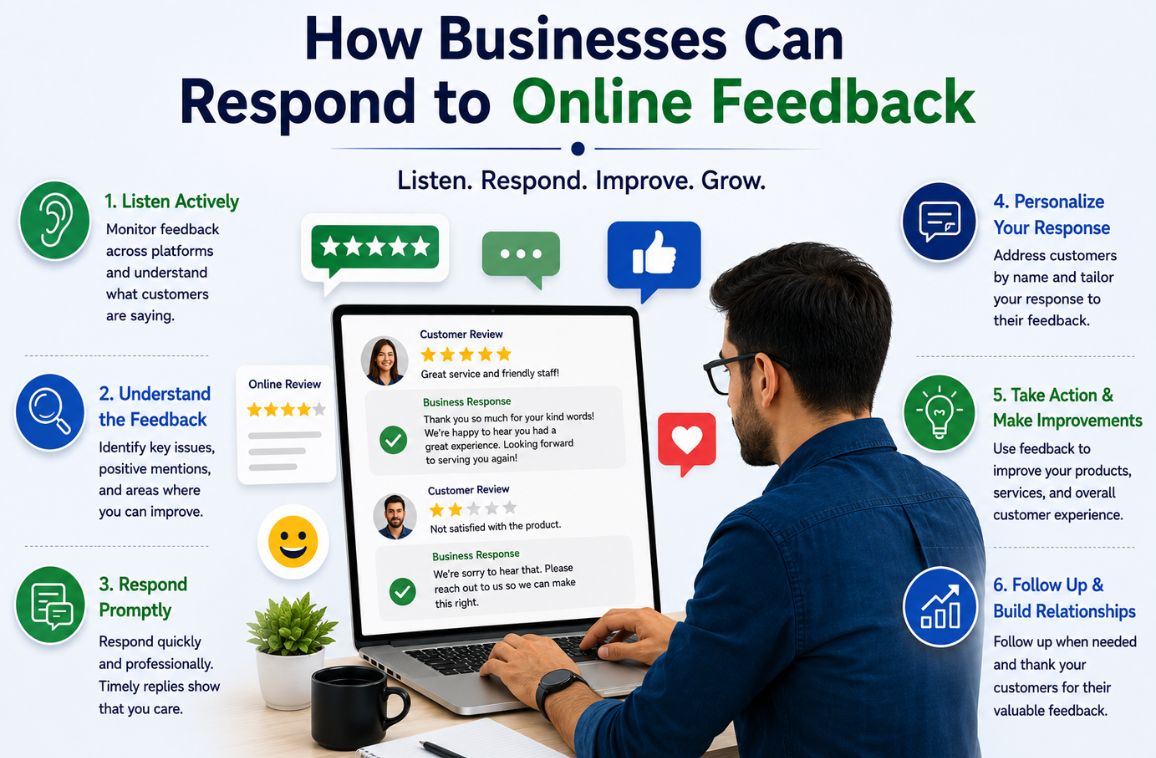
Businesses should monitor Google reviews, social media comments, website feedback, and platforms.
Key practices include:
- Check reviews and comments.
- Identify repeated complaints or questions.
- Track positive feedback to understand what customers appreciate.
- Notice changes in ratings or customer sentiment.
- Record important feedback.
Regular monitoring helps businesses respond before small concerns become larger reputation problems.
Respond Quickly and Professionally
Timely responses show customers that their opinions matter. A delayed response can make customers feel ignored, while a thoughtful response demonstrates responsibility.
Businesses should acknowledge concerns, remain polite, and avoid emotional or defensive language. Responding professionally protects the brand’s reputation and shows potential customers how the business handles difficult situations.
Handle Positive Reviews with Appreciation
Positive reviews deserve attention too. Businesses should thank customers for sharing their experiences and mention specific points when appropriate. A genuine response can strengthen relationships.
Instead of using the same response for every review, businesses can acknowledge the service, product, staff member, or experience mentioned. Personalization makes responses feel authentic rather than automated.
Turn Negative Feedback into an Opportunity
Negative feedback can reveal problems in products, services, communication, or customer support. Instead of deleting criticism or arguing with customers, businesses should look for the underlying issue.
A useful response can follow three steps:
- Acknowledge the concern.
- Apologize when the business made a mistake.
- Offer a practical next step or solution.
When a problem requires private discussion, invite the customer to continue through an appropriate support channel. This protects privacy while demonstrating willingness to resolve the issue.
Avoid Common Response Mistakes
Some responses can damage a brand more than the original complaint. Businesses should avoid blaming customers, using rude language, making unrealistic promises, or sharing private information publicly.

They should also avoid creating fake reviews or manipulating ratings. Authentic feedback is more valuable for long-term reputation building.
Use Feedback to Improve Your Business
Feedback should not stop at the response. Businesses can analyze common comments and use them to improve operations. If customers repeatedly mention slow service, unclear pricing, difficult navigation, or communication problems, those patterns deserve attention.
An online marketing agency can help businesses organize reputation campaigns, monitor audience conversations, and create consistent communication strategies. The goal is to create experiences that naturally generate positive feedback.
Build a Consistent Reputation Strategy
Reputation management works best when it becomes part of the overall marketing process. A digital marketing company can coordinate review monitoring, content creation, social media communication, and customer engagement to maintain a consistent brand voice across every customer touchpoint.
Businesses can also use feedback to improve frequently asked questions, website content, and advertisements. This creates a continuous cycle: listen, respond, improve, and communicate.
Make Social Media Part of the Conversation
Social platforms give customers an immediate way to share experiences. Businesses should monitor comments, mentions, direct messages, and tagged posts. A social media management agency can help maintain response consistency, identify important conversations, and escalate serious issues to the right team.
However, automation should not replace human judgment. Sensitive complaints require personalized communication.
Measure What Matters
Businesses should track useful reputation indicators, including:
- Average review ratings.
- Number and quality of reviews.
- Response time.
- Recurring complaints.
- Customer sentiment.
- Resolution rates.
These measurements show whether reputation efforts are improving.
Conclusion
Online feedback is more than a collection of ratings. It is an ongoing conversation between a business and its audience. By monitoring feedback, responding professionally, addressing genuine problems, appreciating positive experiences, and using customer insights for improvement, businesses can build stronger relationships and greater trust and loyalty over time.
An ORM agency in Hyderabad can support businesses with structured reputation management strategies, helping them respond consistently and protect their online presence. The most successful approach is simple: listen carefully, respond respectfully, solve real problems, and keep improving. When businesses treat feedback as a learning tool instead of a threat, every review becomes an opportunity to build a stronger, customer-focused brand.